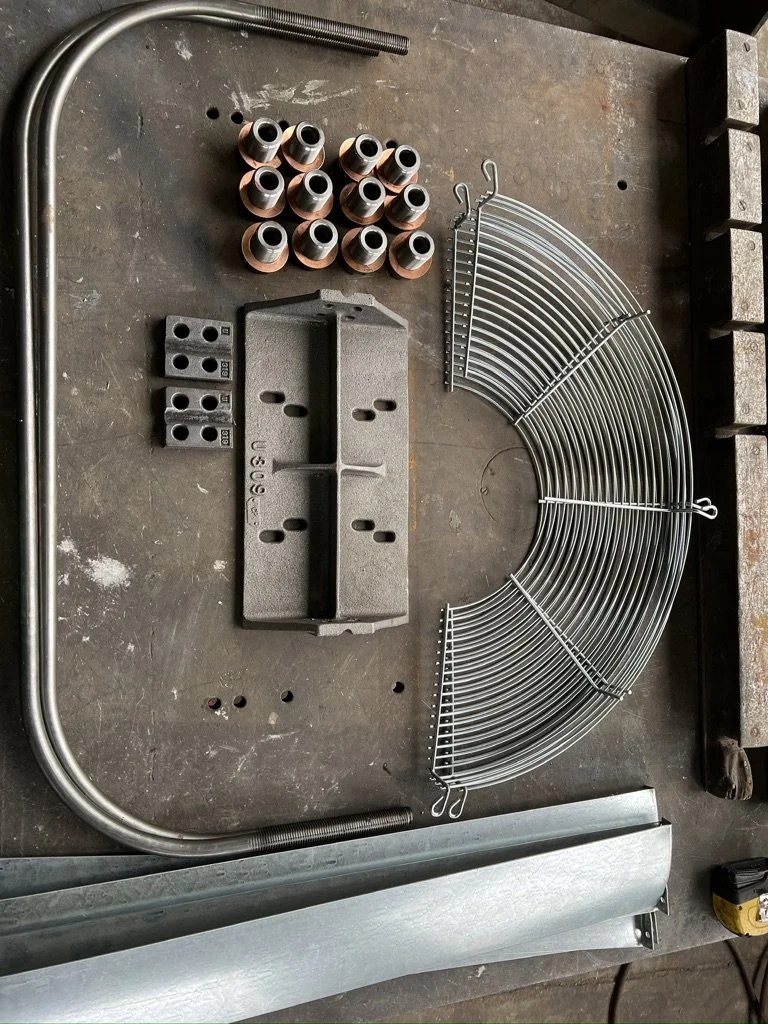
When a project needs castings or components, one of the first decisions is where they come from. An overseas foundry often wins on unit price. A domestic foundry often wins on speed, communication, and control. Neither choice is right for every job.
At ThermaFab, we're an American fabrication company, and we can also source products from China when it makes sense for a customer. That gives us a practical view of both options. Before you commit to a foundry, here are the questions worth asking.
1. What Is the Total Cost, Not Just the Unit Price?
A lower quote per part can look like an easy decision. But the unit price is only one line in the real cost. Add in:
Ocean freight and inland shipping
Tariffs and duties, which can change with little notice
Customs brokerage and port fees
Inventory you have to carry because of longer lead times
The cost of rejected parts, rework, or replacements
Once everything is counted, the gap between domestic and overseas pricing is often smaller than it first appears. Sometimes it disappears.
2. How Long Can You Wait?
Overseas production plus ocean shipping typically adds weeks or months to a lead time. If your schedule is flexible and your order volumes are predictable, that may be fine. If you need parts quickly, or you can't afford a delay holding up a line or a job site, a domestic source is usually the safer bet.
3. What Happens If Something Goes Wrong?
Every supplier has a bad batch eventually. The question is how fast it gets fixed.
With a domestic foundry, you can pick up the phone, visit the floor, and have corrected parts on a truck in days. With an overseas supplier, a quality problem can mean another full production and shipping cycle before you have usable parts. Ask any supplier how they handle defects, who pays for replacements, and how long a fix really takes.
4. How Will Quality Be Verified?
Ask what inspection happens before parts ship, and who does it. Material certifications, dimensional reports, and first-article inspections all matter. For overseas sourcing, find out whether parts are inspected by a third party or someone working on your behalf, or whether you're relying on the supplier's word.
5. How Easy Is Communication?
Time zones, language, and distance all slow down the back-and-forth that custom work requires. Drawing revisions, tolerance questions, and change orders move faster when your supplier is a few hours away instead of halfway around the world.
6. Is Your Design Protected?
If your parts involve proprietary designs, consider how well your drawings and patterns are protected. Intellectual property enforcement varies by country, and it's worth understanding the risk before you send files overseas.
7. Does Your Customer or Project Require Domestic Content?
Some government, infrastructure, and defense work comes with Buy American or domestic content requirements. Some customers simply prefer American-made products and will pay for them. Know the requirements before you source, not after.
8. How Stable Is the Supply Chain?
Shipping disruptions, port backups, and shifting trade policy have made long supply chains less predictable. A domestic source reduces your exposure. For many companies, a mix works best: domestic sourcing for critical or time-sensitive parts, overseas sourcing for high-volume, stable items.
The Right Answer Depends on the Job
There's no single best choice. A large, repeat order of simple parts with a flexible timeline may be a good fit for overseas sourcing. A custom, critical, or rush job usually belongs closer to home.
What matters is having a partner who will give you a straight answer about which option fits.
American Fabrication, With Options
ThermaFab is an American fabrication company first. We build here, and we stand behind our work. When sourcing overseas makes more sense for a customer's budget, we can do that too, with an American team managing the project and answering your calls.
Not sure which route is right for your next project? Talk it through with us.
Call (330) 322-8338 to discuss your project with the ThermaFab team.