Why Precision Machining Matters After the Casting Process
Casting is where a part is born. Machining is where it becomes what it was always meant to be.
In manufacturing, these two processes are often treated as separate conversations — but the truth is, what happens after the casting is just as critical as the casting itself. If you're not finishing with precision machining, you may be leaving quality, performance, and reliability on the table.
Here's why it matters.
Casting Gets You Close. Machining Gets You There.
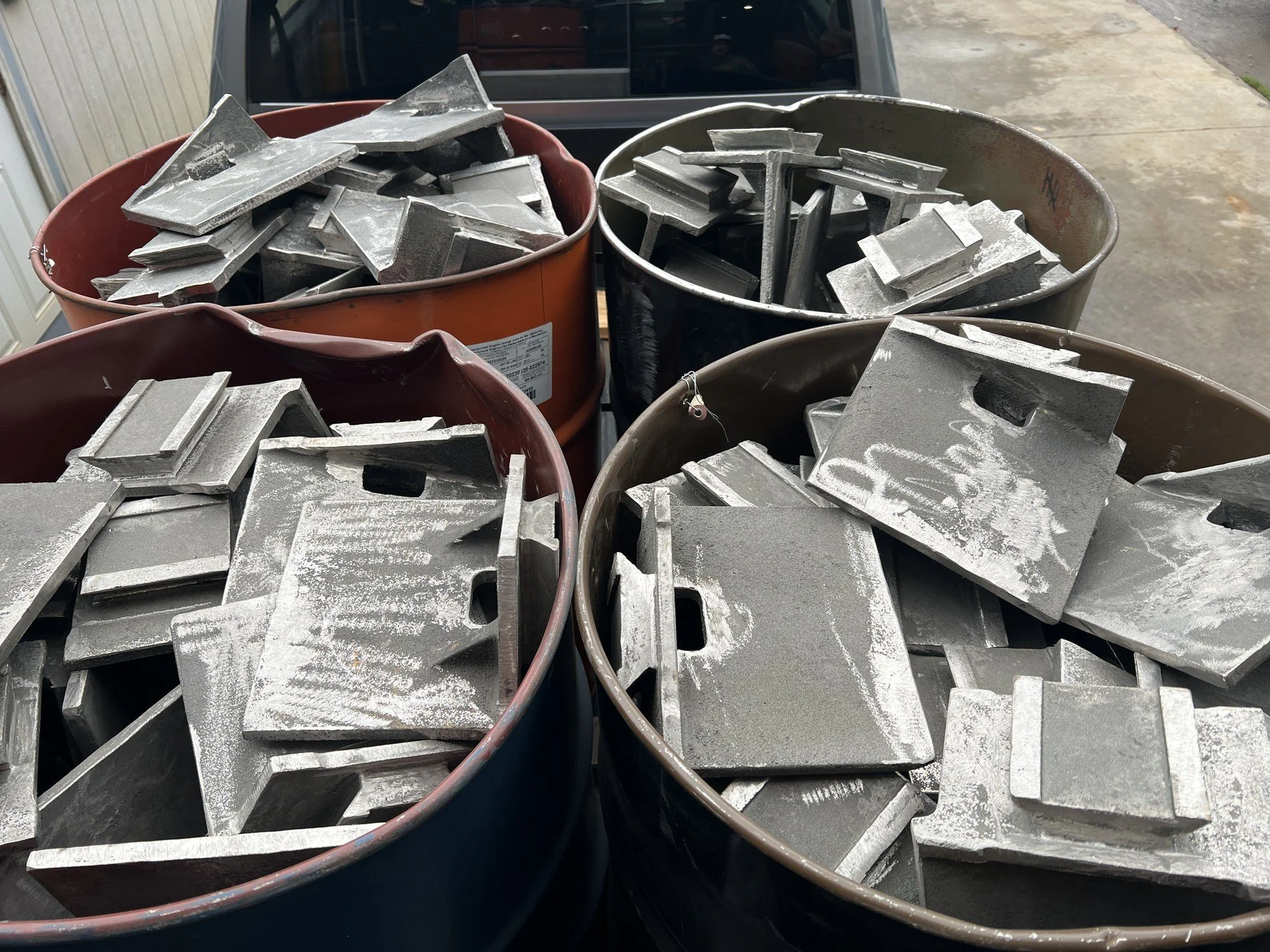
No matter how refined your casting process is, inherent variables will always be present. Shrinkage during cooling, slight dimensional shifts, surface irregularities — these aren't signs of a bad casting. They're simply the nature of the process.
Precision machining is what closes the gap between "close enough" and exact. Through turning, milling, drilling, and finishing operations, machining brings cast parts to their final, precise dimensions — the tolerances that actually matter when a component has to fit, function, and perform in the real world.
In industries where a few thousandths of an inch make the difference between a perfect assembly and a failed one, that gap cannot be ignored.
Surface Finish Isn't Just Cosmetic
One of the most overlooked benefits of post-casting machining is what it does to the surface of a part.
As-cast surfaces are inherently rough. They may contain porosity, scale, or inconsistencies that aren't visible to the naked eye but are absolutely felt under load, pressure, or repeated movement. A poor surface finish leads to accelerated wear, increased friction, and premature failure — all problems that show up downstream, often at the worst possible time.
Precision machining produces controlled, consistent surface finishes that directly impact how a part performs over its lifetime. Smoother mating surfaces. Better sealing. Less wear. Longer service life.
That's not cosmetic. That's engineering.
Tight Tolerances Are Non-Negotiable
In critical applications — whether that's aerospace components, heavy industrial equipment, fluid handling systems, or structural assemblies — tolerances aren't suggestions. They're requirements.
Casting alone cannot reliably hold the tight tolerances that many modern applications demand. Precision machining is what makes those tolerances achievable and repeatable, part after part, run after run.
When your customer needs a component that fits exactly right every single time, "approximately correct" isn't a shipping option.
It Protects the Investment in the Casting Itself
A high-quality casting represents significant investment — in material, tooling, process, and time. Skipping or cutting corners on post-casting machining puts that entire investment at risk.
A cast part that isn't properly machined may fail dimensional inspection, require costly rework, or worse — make it into an assembly where it causes a failure down the line. Precision machining isn't an added expense. It's the step that protects everything that came before it and ensures the part actually delivers on its intended purpose.
The Thermafab Difference
At Thermafab, we understand that quality doesn't stop at the casting. Our precision machining capabilities are built to take cast components from raw form to finished specification — holding the tolerances your applications demand, with the surface quality your assemblies require.
From first pour to final cut, we're committed to parts that perform.
👉 Visit thermafab.com to learn more about our casting and precision machining capabilities, and let's talk about what your next project needs.
Built right. Machined tight.
— The Thermafab Team